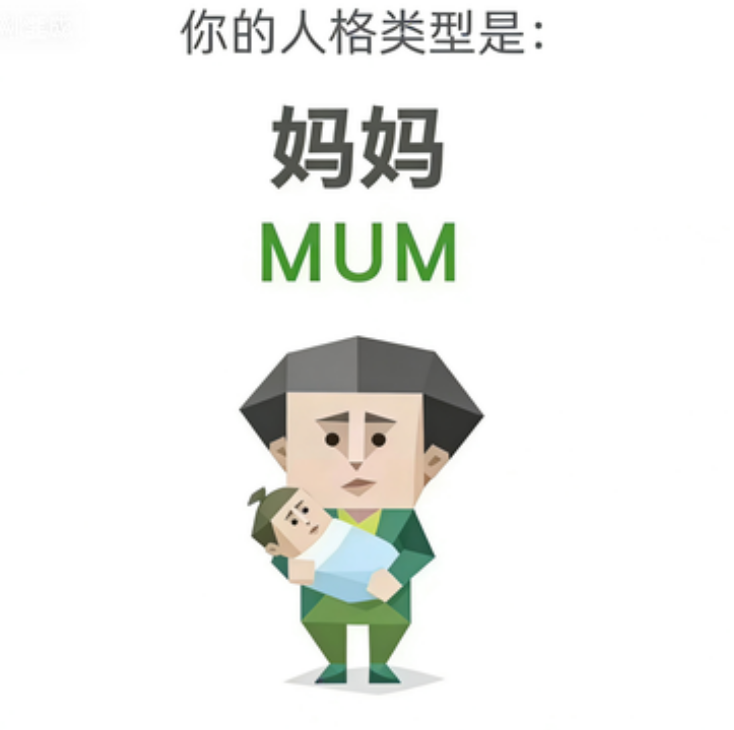
What is MUM SBTI?
Congratulations, you have tested out the rarest mother personality in China. Yes, before chaos began, before time had a name, before the first star burped its first burp, there was a mother. The background of MUM's personality is gentleness, they are good at sensing emotions, have super empathy, and know when to stop and when to say "forget it" to themselves. MUM is like a doctor, curing other people's unhappiness. It's a pity that when MUM sheds tears, the dose of medicine they give themselves is always smaller than that given to others. MUM often discounts their tenderness. The MUM personality operates on a frequency that most people can't consciously detect but everyone can feel. Walk into a room where a MUM type is present and something softens. The sharper edges of social interaction get rounded. The default human anxiety of being evaluated drops by several notches. MUM didn't do anything. They were just there, at the right frequency. This emotional intelligence isn't passive — it's active and consuming. MUM is simultaneously holding the emotional states of everyone in the room, cross-referencing them, identifying who needs what, and quietly delivering it. The friend who is having a hard week gets the specific kind of check-in that helps them, not the generic one. The colleague who seems fine but isn't gets noticed. The person who doesn't know how to ask for comfort gets comfort anyway, delivered sideways so they don't have to feel vulnerable. Here is the part that matters most: MUM deserves exactly what they give. The full dose. No discount. The tragedy is not that they care too much — caring too much is not a flaw, it's a gift. The tragedy is the persistent, learned smallness with which they apply that same care to themselves. MUM at full capacity — giving and receiving in equal measure — is one of the most extraordinary humans alive. The work is getting them to believe they're allowed.
MUM Personality Traits & Profile
MUM Strengths
- Emotional intelligence at a level that feels almost like a sixth sense for human need
- Creates safety and belonging in any environment simply through their presence
- Deeply nurturing without being smothering — reads the room on how much is wanted
- Exceptional at holding space for others during crisis without needing the spotlight
- Builds trust quickly because people intuitively sense they won't be judged
- Forgives with genuine completeness rather than the performative kind
MUM Weaknesses
- Self-care is treated as optional when other people's needs are present, which is always
- Difficulty receiving care without immediately trying to redirect it back outward
- Personal pain gets minimized and managed privately until it can't be anymore
- Can attract people who need a caretaker rather than people who want a partner
MUM in Relationships
MUM types in relationships are the people you feel lucky to have found. In romantic partnerships, they create the kind of warmth that makes home feel like home — emotionally present, deeply attentive, gifted at the specific love languages of noticing and remembering. Their partners often describe them as "the person who actually sees me," which is the highest possible praise in human intimacy. The difficulty is that MUM types are so naturally oriented toward the other person's needs that their own can become invisible even to people who genuinely want to care for them. Partners have to actively create space for MUM to receive without deflecting. In friendships, MUM is the one everyone calls first when something is wrong — not because they give advice, but because they listen in a way that makes the problem feel more manageable just by being spoken aloud. At work, they are the relational glue of teams, the ones who make sure the quiet person gets heard and the stressed person feels supported. The relationship that fits MUM best is one where the other person pays attention without being asked.
How Rare Is MUM?
MUM personalities are estimated at around 5-7% of the population, and the overlap between this personality type and the invisible labor that keeps societies functioning is not a coincidence. They are the people who remember the birthday, who make the meal when no one asked, who send the right message at 11pm when someone is quietly falling apart. Their rarity is a quiet injustice — the world consistently requires more from them than it returns, which is why recognizing and actively appreciating the MUM types in your life is not just nice but ethically necessary. They are holding more than anyone realizes, and they're doing it on a discounted dose.
Compare with Other Types
How does MUM compare to other SBTI personality types? Here's how each related type differs at a glance.
Are you a MUM?
Take the test to see your personalized dimension breakdown.